Commentary: Singapore could be a model for cooler cities in a world heating up
SINGAPORE: In Singapore, climate change received due attention during the 2022 National Day Rally, when Prime Minister Lee Hsien Loong announced national strategies to conform to climate hazards and mitigate carbon emissions.
While PM Lee spoke at length well-nigh bounding main level ascension and how to adapt to this long-term threat, in that location is another critical immediate issue - how do nosotros adapt and mitigate warmer temperatures from global warming and urbanisation in Singapore that will bear on our solar day-to-day lives?
In our daily lives, we have been mostly sheltered from the harsh realities of heat and humidity, thank you to the ubiquitous air-conditioner in our homes, transport modes, offices and most buildings.
However, this does not bode well for a sustainable future. Once outdoors, when taking refuge in air-conditioned spaces is non an option, we are immediately hit by the sweltering heat.
READ: Hot in the metropolis: Rising night temperatures a potentially major health event in Asian metropolises
Mind: How practise planes, trains and automobiles – and ships – gene into carbon emissions, and how are they getting greener? | EP ten
Older Singaporeans may recall that weather forecasts on the television receiver or radio would call for daytime maximum temperatures peaking around 32 or 33 degrees Celsius.
Nowadays, information technology appears maximum daytime temperatures of 34 or 35 degrees Celsius are not uncommon.
This is validated by the climate data measured in Singapore. 2022 was the hottest year in Singapore in its recorded history and the hottest 24-hour interval was recorded even more recently in April this yr.
The early months of 2022 were very warm indeed, with hot night-time conditions giving no respite to the daytime heat.
THE Scientific discipline Behind URBAN Oestrus
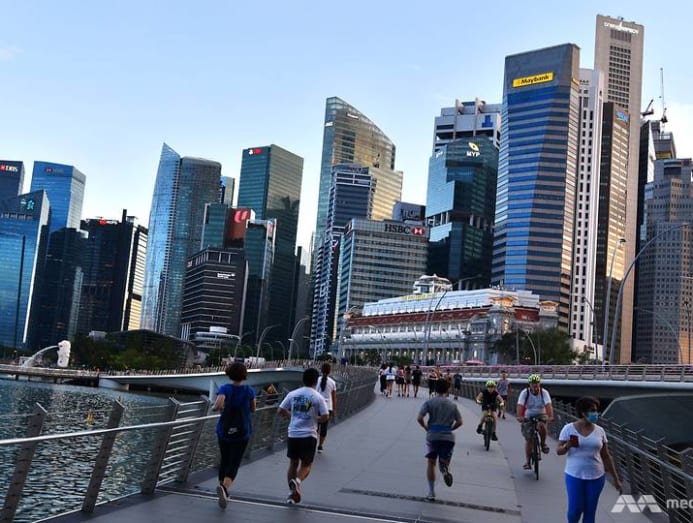
Singapore is subject to warmer temperatures from climate change merely it is also warming at twice the global average rate. The increased warming from greenhouse gases is compounded by our high urban density—of buildings, roads and people—within our 720 sq km of land area.
In a highly built up surroundings, heat tends to go trapped in materials such as concrete, steel and cobblestone, leading to what we call the urban heat island (UHI) effect.
To make matters worse, motorised vehicles, industries and other human activities generate even more heat within the urban center.
READ: Commentary: Why that unusually high rainfall in Singapore during the last summer monsoon may be our new normal
Urban heat is a worldwide phenomenon and societies are afflicted to varying degrees, depending on local weather. In Singapore, the tropical combination of high temperature, high humidity and low wind speeds have always posed a challenge for urban living.
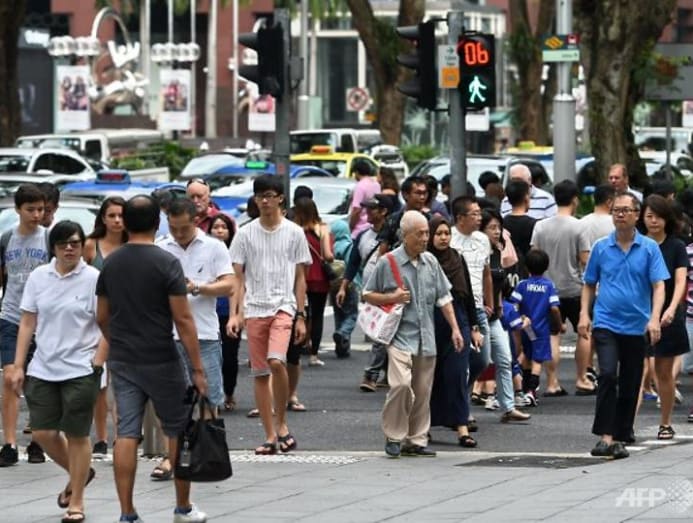
But all is not lost. We can suit and mitigate with science, technology and a mutual agreement of how cities can be libation. Research conducted in Singapore previously has produced measurements and models that give us a good thought of what causes the UHI.
In Singapore's early years, when at that place were much less people than in that location are today, choosing a well-ventilated building site on college grounds and architectural features were effective in reducing the effects of tropical heat.
Heed: How hot tin can cities go and what tin we practice to cool things downwardly? | Ep eight
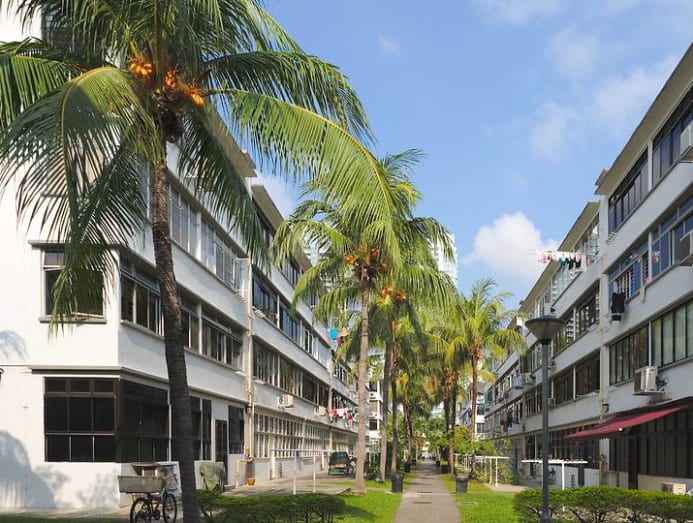
In traditional Kampungs, elevating old Rumah Melayu on stilts met the purpose of enhancing indoor and outdoor air period.
If you observe old buildings such as the conserved shophouses in parts of central Singapore, you lot would also notice they had high ceilings and air wells that open towards the sky. These provided natural lighting and ventilation to keep the indoor climate cool.
There were other means buildings were constructed to optimise comfort – using external shading, orienting buildings based on prevailing winds to maximise cool breezes, amid others.
However, in contempo decades, an increasing population, taller buildings stacked closer together, greater volumes of industrial and traffic activities, and more paved areas replacing natural forested areas take accelerated the UHI effect.
When these happen, places like Orchard Road tin can hit the mercury up to 7 degrees Celsius warmer than parts of Singapore which are less built upwardly.
WHAT CAN WE Exercise ABOUT THE Heat?
The physical consequences of urbanisation, in add-on to warmer temperatures from climate modify, atomic number 82 to increasing heat stress and thermal discomfort for citizens, with potentially detrimental effects on health, productivity, and correspondingly, the economy.
Researchers from Singapore universities, agencies and the inter-institutional Cooling Singapore research project initiated by the Singapore-ETH Centre have identified the manifold reasons for high urban temperatures.
The adjacent pace is to ascertain precise adaptation and mitigation measures for amend outdoor thermal comfort and a cooler Singapore.
In our work, we've often heard a potential solution forth the lines of "what about air-conditioning the whole of Singapore?" While this option temporarily reduces one's exposure to heat outdoors, air conditioners hither are powered by energy generated from fossil fuels.
READ: Commentary: The wonder of clear skies and returning wildlife is our new climate trouble
READ: Explainer: Why adapting to climate change matters
More widespread use of air conditioners volition only increase Singapore'due south carbon footprint and its contribution to global warming.
What we really need are active mitigation measures that address the root of the problem, such as reducing or eliminating urban heat sources, which includes replacing petrol- or diesel-powered cars with electric vehicles that emit less waste matter heat into the environment.
Singapore has already been actively maintaining more "natural" surfaces in the city. We should continue to introduce more trees, community gardens, and parks, besides as green roofs and walls.
These surfaces blot and emit less heat, as well as cool the city by evapotranspiration.
Apart from nature-based solutions, engineered solutions such equally white roofs and walls that reflect more heat away from the city during daytime and installing photovoltaic panels on rooftops or building facades can help to maximise make clean and renewable free energy generation.
Widening the scale from the individual building and neighbourhood to the city, urban planning becomes crucial.
The planned Punggol Digital District is a good instance of how urban planning can lead to better outcomes.
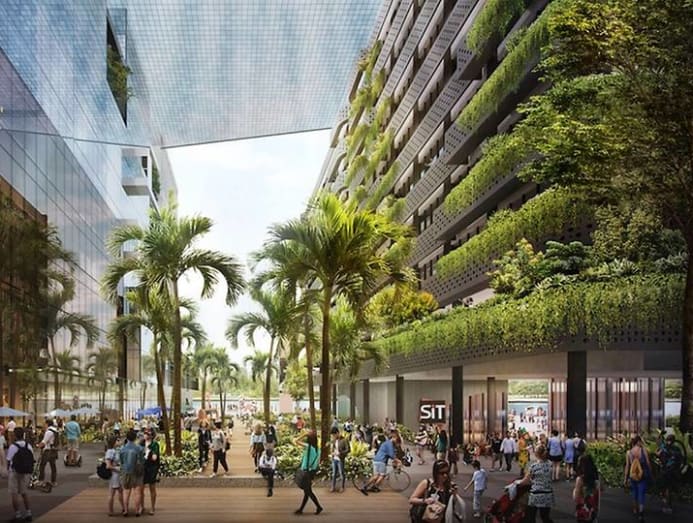
With a business park housing companies in the fundamental growth industries in the digital economy, an establishment of higher learning and other amenities inside a primarily residential district, we tin can expect residents living, studying and working at that place to have reduced commute fourth dimension, and correspondingly, less traffic jams, pollution and less heat generated.
AN INTEGRATED DIGITAL APPROACH
Yet, to drastically rethink an unabridged urban system is complex. There are many parameters that affect heat and outdoor thermal comfort, which calls for an integrated and holistic approach to urban climate mitigation and adaptation.
Researchers in Cooling Singapore 2.0 will develop the Digital Urban Climate Twin (DUCT), which can represent physical features of a city—such as the geometry of land and infrastructure, local climate, transportation, industry and people—in a digital form to better empathize their function, behaviour and effects on the other features.
With the adequacy to simulate scenarios of entire cities, the DUCT could support planners in creating libation and more resilient urban scenarios.
READ: Tengah's Park District to feature Singapore's start 'car-costless' town center, flats to be launched in August
READ: Commentary: What will it take to brand Singapore truly motorcar-lite?
There are plans to apply DUCT to analyse urban climate impacts in several new towns in Singapore.
In planning new cities, such as the new capital of Indonesia, the DUCT could forestall the development of unliveable settlements before they are actually built.
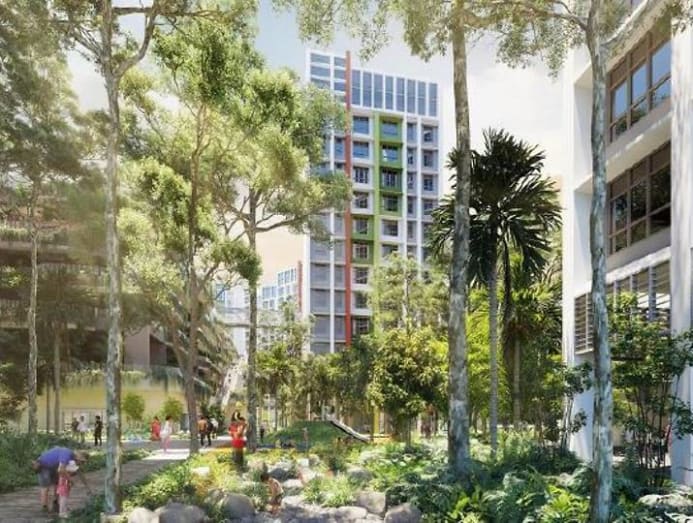
In existing cities, it could simulate how scenarios such as a phased replacement of internal combustion engines in vehicles with batteries and fuel cells can have positive effects on the local climate, air quality and health.
Urbanisation will continue to be a major economical driver in the coming years, with 70 per cent of the global population living in urban areas by 2050. Closer to home, the urban populations in Southeast Asia are expected to increase by more 500 meg people.
If unsustainable urbanisation practices were to keep unchecked, we volition undoubtedly endure the negative consequences on local climate, human well-being and the economy.
In Singapore, the Housing and Development Board (HDB), the Edifice and Construction Say-so (BCA), NParks, the new Ministry of Sustainability and the Environment, together with the planning capabilities of the Urban Redevelopment Authority (URA), are key success factors in urban heat mitigation.
With enhanced capabilities in urban climate simulation, adaptation and mitigation, Singapore could play a leading role in the motility towards more sustainable and climate-sensitive urban design in the region and beyond.
Professor Gerhard Schmitt is a lead principal investigator of Cooling Singapore and director of Singapore-ETH Centre. Dr Winston Chow is a principal investigator of Cooling Singapore and Associate Professor of Science, Technology and Society at the Singapore Management Academy.
Source: https://cnalifestyle.channelnewsasia.com/commentary/commentary-singapore-could-be-model-cooler-cities-world-heating-294621
0 Response to "Commentary: Singapore could be a model for cooler cities in a world heating up"
Post a Comment